
VAT relief for disabled people can significantly reduce the cost of certain home adaptations, but the rules are narrower than many homeowners expect.
A qualifying ramp, widened doorway or adapted bathroom may be charged at 0% VAT, while some mobility aids installed for people aged 60 or over may qualify for a reduced rate of 5%. A general home renovation does not become VAT-free simply because it benefits someone with a disability.
The distinction matters when you are budgeting for essential work. On a substantial adaptation, applying the correct VAT treatment can make a meaningful difference to the final cost. Applying it incorrectly can leave both the customer and contractor exposed to an HMRC challenge.
This guide explains the rules in practical terms, including who may qualify, which building works are covered, what commonly falls outside the relief and what should happen before an invoice is issued.
This article provides general information rather than personal tax advice. Eligibility depends on the customer, the property, the purpose of the work and the exact contractual scope. Tax rules can also change, so check the latest HMRC guidance before relying on any VAT treatment.
VAT Relief for Disabled People: The Three Tests That Matter
There is no blanket VAT exemption for disabled people. For building work to be zero-rated, three separate questions normally need a positive answer:
- Is the customer eligible? The person must meet HMRC’s definition of being chronically sick or disabled.
- Is the work for personal or domestic use? It must be needed specifically for the disabled person rather than for business or general communal use.
- Is the work itself eligible? Only particular goods, services and building adaptations qualify.
Satisfying one test does not compensate for failing another. A person may have a qualifying disability, for example, but an unrelated kitchen refurbishment or replacement window would still normally be charged at the standard VAT rate.
The Low Incomes Tax Reform Group’s guide to VAT reliefs for disabled and older people provides a useful independent explanation of these conditions. The detailed rules are set out in HMRC VAT Notice 701/7.
What Does “Chronically Sick or Disabled” Mean for VAT?
HMRC describes an eligible person as someone with a physical or mental impairment that has a long-term and substantial adverse effect on everyday activities, or someone with a condition that the medical profession treats as a chronic sickness.
There is no simple list of medical conditions that automatically qualifies everyone. Conditions such as arthritis, diabetes, multiple sclerosis or severe back problems can affect people very differently. The practical test is the nature, duration and effect of the condition.
You do not have to be registered disabled, receive disability benefits or pass a means test to qualify. Equally, receiving a particular benefit does not make every purchase or building project zero-rated.
Temporary incapacity, such as a broken leg, does not normally satisfy the definition. Being older is not enough on its own either, although a separate reduced rate may apply to certain mobility aids supplied and installed for somebody aged 60 or over.
Zero-Rated, Reduced-Rate and Standard-Rate VAT Compared
The expressions “VAT-free”, “VAT exemption” and “zero-rated” are often used interchangeably in everyday conversation. Technically, they do not mean the same thing. For qualifying disability adaptations, the relevant treatment is usually zero rating rather than exemption.
| Circumstance | Possible VAT rate | Important limitation |
|---|---|---|
| Qualifying adaptation for an eligible disabled person at their private residence | 0% | The customer, use and exact building work must all qualify |
| Qualifying mobility aid supplied and installed in the private home of someone aged 60 or over | 5% | Only specified mobility aids are covered, and supply alone is not enough |
| General renovation, maintenance or unrelated improvement work | Usually 20% | Making a home more convenient does not automatically create VAT relief |
| Materials bought for DIY work or work carried out free by a friend or relative | Usually 20% | There is no qualifying supply of construction services to which the materials can be linked |
These rates should be treated as starting points, not a substitute for assessing the actual project. A job containing both qualifying adaptation work and general improvements may require the different elements to be identified and treated separately.
Which Disabled Home Adaptations Can Be Zero-Rated?
HMRC identifies several categories of building work that may qualify when carried out for an eligible disabled person at their private residence.
Access ramps
Constructing a ramp to help a disabled person enter or move around their home may be zero-rated. For these purposes, a private residence can include the garden, yard, garage and other domestic areas connected with the home.
The definition is specific. Lowering a doorway threshold is not treated as constructing a ramp, and building a vehicle driveway is not covered by this particular relief. If a wider landscaping scheme includes a ramp, only the qualifying access work and directly connected elements may receive relief.
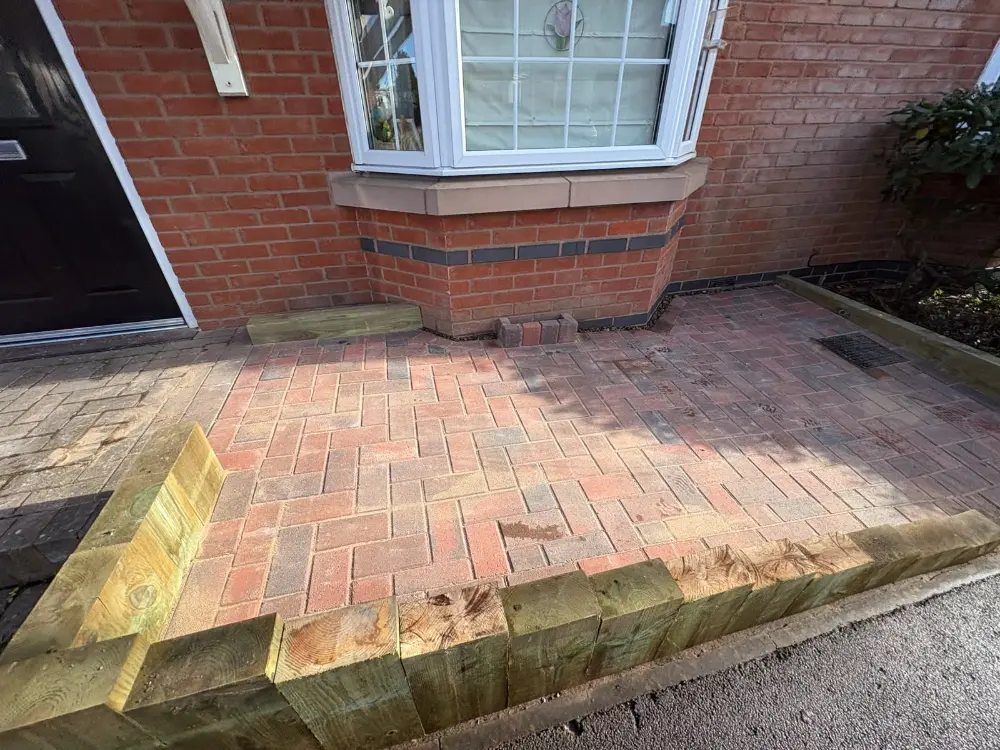
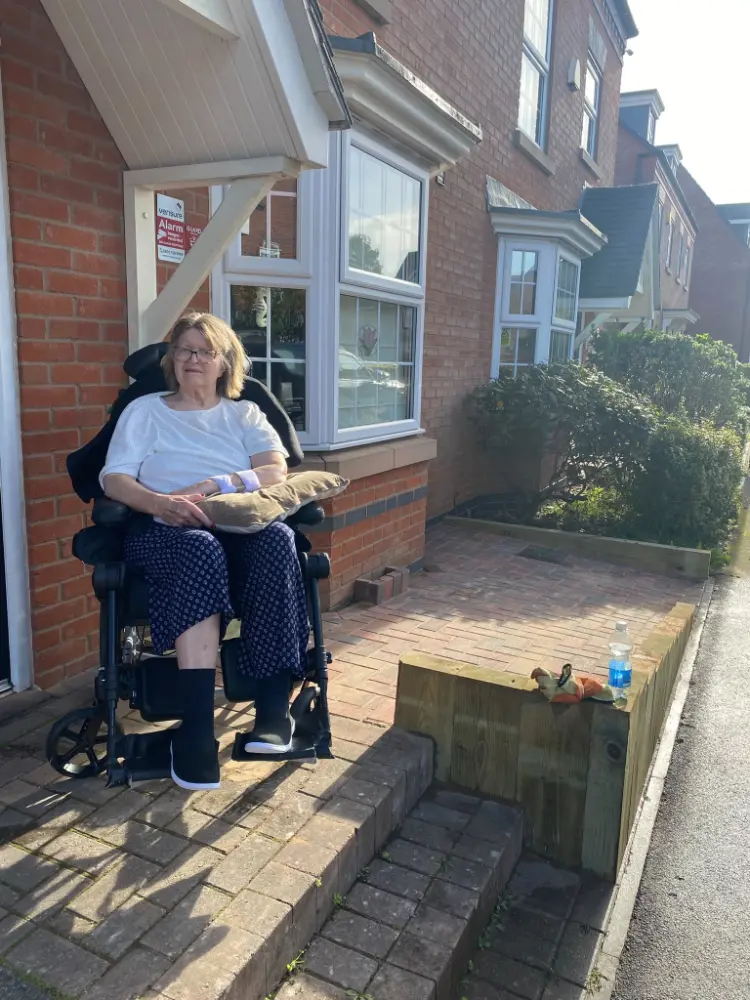
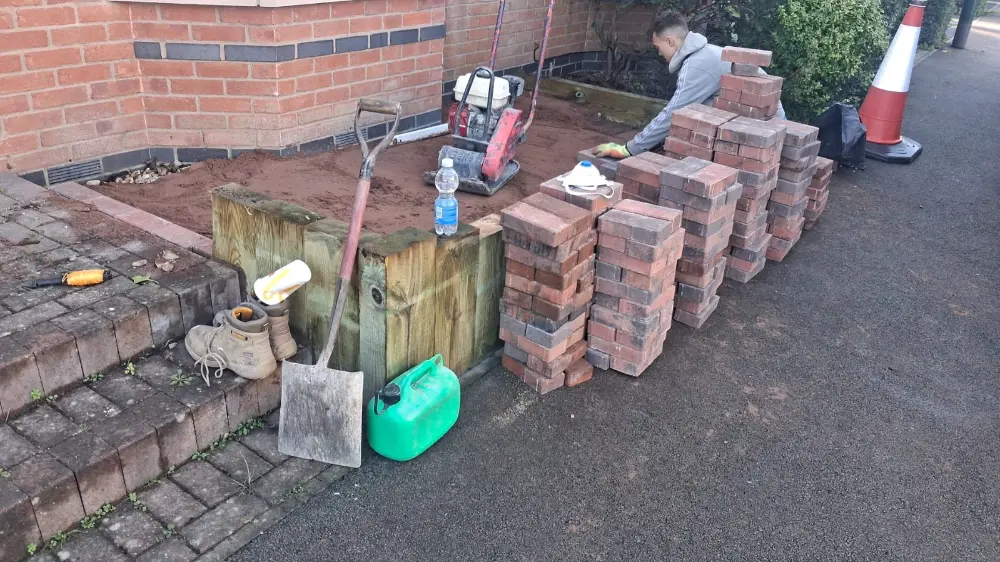
A practical example is TessCon’s wheelchair-accessible ramp installation in Harborne, Birmingham. The project involved preparing a stable base, installing retaining edges and forming a block-paved route to the entrance. It demonstrates how an accessibility adaptation can be incorporated into the existing frontage without looking like a temporary addition.
Whether any individual ramp project qualifies for VAT relief still depends on the customer’s eligibility, the purpose of the work, the contract and the supporting declaration. The presence of a ramp by itself does not settle the tax position.
Widening existing doorways and passages
Widening an existing doorway or passage to help a disabled person move through the property may qualify. This can include widening an existing route across the garden.
Constructing an entirely new doorway or passage is treated differently and is not covered by this relief. Replacing a window with a new doorway is also outside the specific provision for widening an existing doorway.
Accessible bathrooms, shower rooms and lavatories
Providing, extending or adapting a bathroom, shower room, washroom or lavatory may be zero-rated where the work is necessary to suit the disabled person’s condition.
This can extend beyond a single specialist product. Essential work such as preparing footings, levelling the ground, connecting utilities, providing drainage and making good the immediate area may also qualify when it is genuinely necessary to deliver the eligible facility.
A fashionable bathroom redesign does not qualify merely because one member of the household is disabled. The adaptation must be required because of that person’s condition, and unrelated upgrades may need to remain standard-rated.
Lifts and lifting equipment
The installation of a lift designed to help a disabled person move between floors of their private residence may qualify. Certain stair lifts, chair lifts and specialist lifting equipment can also be zero-rated when the relevant customer and use conditions are satisfied.
Emergency alarm call systems
An emergency alarm system designed so that a disabled person can call a specified person or control centre for help may qualify. An ordinary intruder alarm, internal intercom, standard telephone, CCTV system or alarm that simply activates lights or a siren does not qualify under this provision.
Can Groundwork, Materials and Making Good Qualify?
This is one of the most frequently overlooked parts of the rules. VAT relief is not necessarily limited to the final ramp, widened door or sanitary fitting.
Necessary preparatory and restoration work may also be zero-rated when it forms part of a qualifying construction service. Depending on the project, this could include excavation, ground levelling, removing brickwork, installing a suitable door frame, connecting services or restoring the immediate decoration disturbed by the adaptation.
Building materials supplied by a VAT-registered contractor as part of eligible construction work may also be zero-rated. Materials bought separately for DIY installation, or for work performed free of charge by a friend or relative, will not normally qualify because there is no linked supply of qualifying construction services.
The phrase “making good” should not be stretched into a wider refurbishment budget. Restoring the immediate area affected by the adaptation may qualify. Redecorating unrelated rooms, upgrading the whole garden or replacing features that did not need to be disturbed generally will not.
What Home Improvements Do Not Normally Qualify?
Some alterations may be genuinely helpful to a disabled person but still fall outside the building work covered by VAT Notice 701/7. Examples include:
- Constructing a new doorway or passage rather than widening an existing one
- Creating or adapting a downstairs bedroom
- Installing a central heating boiler
- Replacing ordinary windows or doors
- Extending or adapting dining rooms, living rooms, utility rooms, kitchens, offices or carers’ rooms
- General-purpose kitchen improvements that were not designed specifically around disability needs
- Building a vehicle driveway
- Later maintenance or redecoration that is not part of the original qualifying work
Separate professional services from architects, surveyors or consultants are also usually standard-rated. Treatment can differ where those services form part of a single design-and-build supply, so the contractual arrangement matters.
How Mixed Adaptation and Renovation Projects Should Be Handled
Real projects rarely fit into tidy categories. A family might commission an accessible bathroom alongside a bedroom refurbishment, or an entrance ramp as part of wider paving and landscaping work.
The honest answer is not that the whole project is VAT-free. The qualifying adaptation, necessary preparation and immediate making good may be eligible, while the general improvement work remains standard-rated.
A well-prepared quotation should make the scope clear enough for the contractor to assess the VAT position. Where appropriate, it should distinguish:
- The accessibility problem being addressed
- The work required specifically because of the person’s condition
- Essential preparatory work and immediate reinstatement
- Optional, decorative or general renovation work
- Separate professional services and other standard-rated costs
Clear scoping protects both parties. It also prevents the client from assuming that every element of a larger home renovation will receive the same VAT treatment.
When Does the 5% VAT Rate Apply to Mobility Aids?
A separate reduced rate of 5% can apply when certain mobility aids are supplied and installed in the private home of someone aged 60 or over. The person does not have to meet HMRC’s definition of being chronically sick or disabled for this particular relief.
The specified mobility aids include:
- Grab rails
- Ramps
- Stair lifts
- Bath lifts
- Built-in shower seats or showers containing a built-in seat
- Walk-in baths with sealable doors
The installer must both supply and install the item. Buying a ramp or grab rail separately and arranging installation elsewhere does not meet this condition. Repairs and replacements of an existing installation are not covered by the reduced-rate provision.
If someone is both over 60 and eligible as a disabled person, the 0% route may be available for qualifying work instead of the 5% rate. The correct treatment depends on the circumstances, so it is worth resolving the position before accepting a quotation.
How Do You Claim VAT Relief on a Home Adaptation?
VAT relief is normally applied by the supplier. The customer does not usually pay the full amount and then reclaim VAT directly from HMRC.
The contractor should establish whether the customer and the work qualify before applying zero-rated or reduced-rate VAT. The customer will usually be asked to complete a written declaration explaining their eligibility and confirming that the work is for personal or domestic use.
HMRC provides a suggested eligibility declaration for VAT relief. The declaration is retained by the supplier with their VAT records. It is not an exemption certificate issued or approved by HMRC.
Completing the form does not automatically make the work eligible. The supplier remains responsible for checking that the goods and services qualify. A contractor should not simply remove VAT because a customer asks them to.
If the disabled person cannot sign, a parent, guardian, doctor or another responsible person may be able to complete the declaration on their behalf. In general, another person may also pay for qualifying work without preventing relief.
If VAT has been charged incorrectly, HMRC does not normally refund the customer directly. The supplier must correct their VAT records and arrange any appropriate refund.
Can You Combine VAT Relief with a Disabled Facilities Grant?
VAT relief and a Disabled Facilities Grant are separate forms of support. A grant can help fund an adaptation, while VAT rules determine the tax charged on the supply. Receiving a grant does not automatically prove that the work is zero-rated, but grant-funded qualifying work can still receive the appropriate VAT treatment.
This distinction matters because the two schemes do not cover exactly the same work. The government’s Disabled Facilities Grant guidance says a grant may support work such as a downstairs bedroom or suitable heating system. HMRC’s disability building work relief does not generally zero-rate those particular alterations.
Where a council pays a grant directly to the contractor, HMRC says the invoice should clearly identify the disabled person for whom the work was completed. If you intend to apply for a grant, contact your local council before starting work because approval and assessment requirements can affect the process.
Questions to Ask Before Accepting a Quote
A productive conversation with the contractor should go beyond asking whether the entire job is “VAT exempt”. Ask:
- Which elements of the proposed work may qualify for 0% or 5% VAT?
- Which elements will remain at the standard rate?
- Are materials being supplied as part of the qualifying construction service?
- What eligibility declaration or supporting information is required?
- Does the quote separate accessibility work from optional improvements?
- Will any grant-funded work be invoiced in the name of the eligible person?
TessCon can assess the physical work, explain how the construction scope is divided and identify where specialist tax guidance may be needed. To discuss an accessibility adaptation or broader renovation in Birmingham or the surrounding areas, contact TessCon for an initial conversation.
Frequently Asked Questions About Disability VAT Relief
Can disabled people get VAT relief on home adaptations?
Yes, certain adaptations can be zero-rated when the customer is chronically sick or disabled, the work is for personal or domestic use and the building service itself qualifies. There is no general relief covering every home improvement.
Are wheelchair ramps VAT-free for disabled people?
Constructing a ramp at an eligible disabled person’s private residence may be zero-rated when it helps them gain access to or move around the property. A vehicle driveway and the simple lowering of a threshold are not treated as ramp construction under this relief.
What medical conditions qualify for VAT relief?
HMRC does not provide a definitive list. The person must have a physical or mental impairment with a long-term and substantial adverse effect on everyday activities, or a condition treated by the medical profession as a chronic sickness. Temporary injuries do not normally qualify.
Do I need to receive disability benefits to qualify?
No. VAT relief is not means-tested, and you do not need to be registered disabled or receive a particular benefit. The customer and the specific supply must still meet HMRC’s conditions.
Is there a 5% VAT rate for mobility aids for people over 60?
Yes. Specified mobility aids, including ramps, grab rails and stair lifts, can qualify for 5% VAT when supplied and installed together in the private home of someone aged 60 or over. General building alterations are not covered by this reduced rate.
Can I reclaim VAT from HMRC after the work is finished?
Usually not. The supplier should apply the correct rate when making the supply. If VAT was charged incorrectly, the supplier is responsible for correcting their records and arranging any refund.
Can materials for a disabled home adaptation be zero-rated?
Materials supplied by a VAT-registered contractor in connection with qualifying construction services may be zero-rated. Materials bought for DIY work or installation carried out free by a friend or relative generally do not qualify.
Can VAT relief be used alongside a Disabled Facilities Grant?
Potentially, yes. The grant and VAT relief are separate, and the work must satisfy the rules of each scheme. Grant approval does not automatically mean that every part of the project is zero-rated.
Does a general home renovation qualify for disability VAT relief?
Usually not. Only specified adaptations and directly connected work qualify. General decorating, replacement windows, ordinary kitchens, bedrooms and unrelated extensions normally remain standard-rated.
Planning an Accessible Home Adaptation
The best time to discuss VAT is before the specification, quotation and contract are finalised. That allows qualifying access work, essential preparation and optional improvements to be identified clearly, rather than trying to untangle the invoice afterwards.
VAT relief for disabled people can make essential home adaptations more affordable, but only when the individual, the intended use and the work all meet the relevant conditions. For practical advice about ramps, accessible entrances or wider home renovation work, speak to TessCon about your property and requirements.