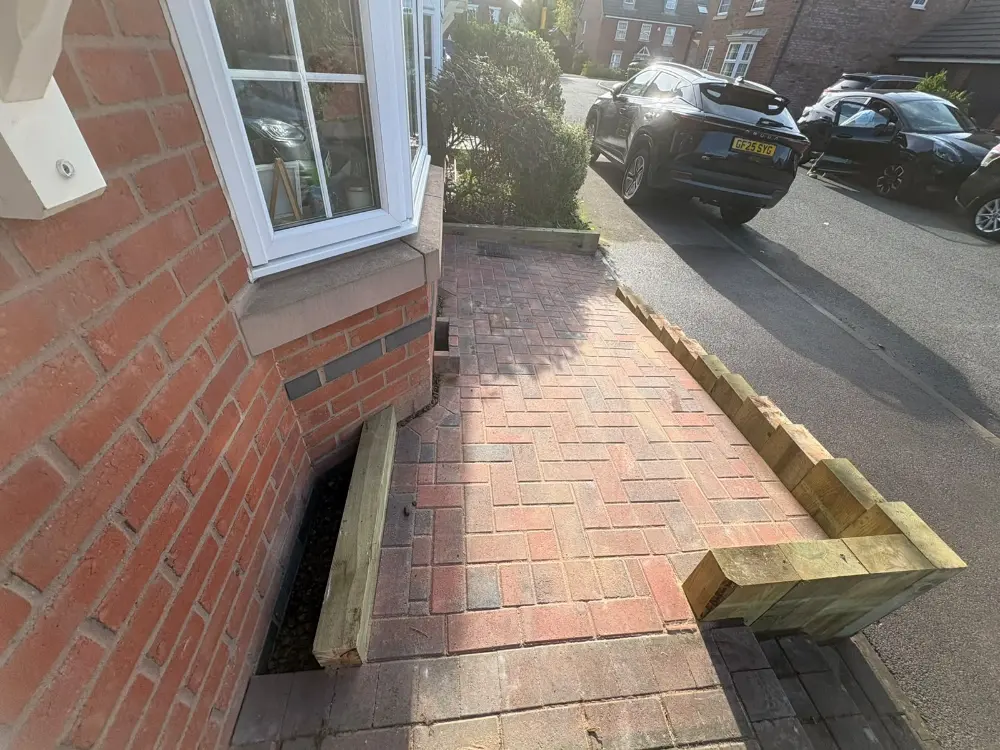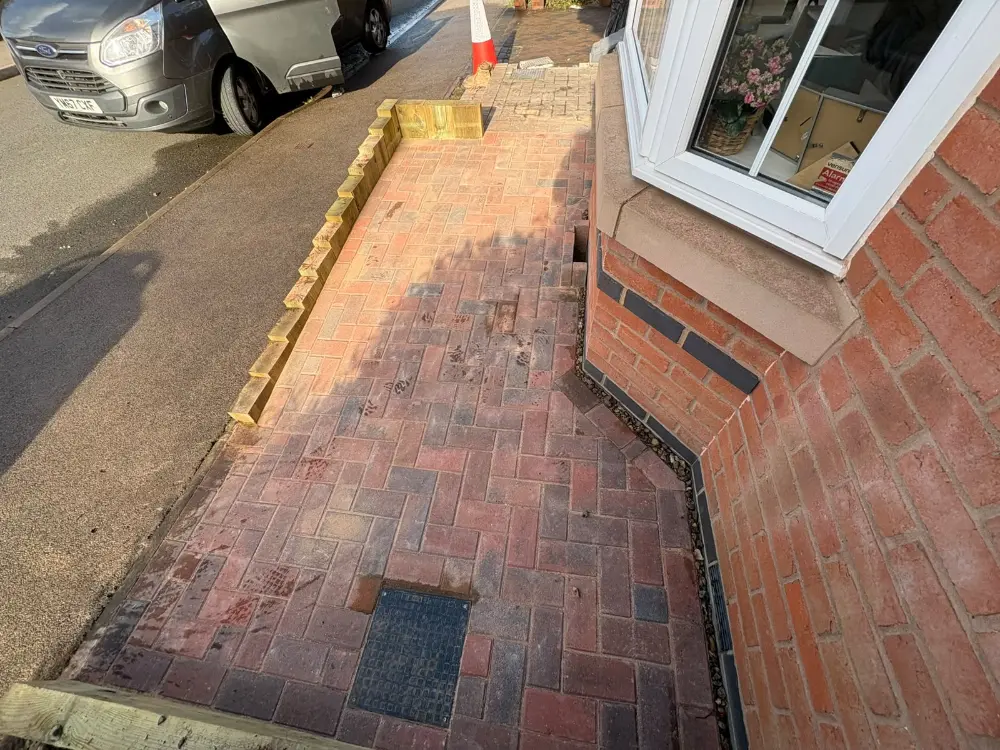
TessCon recently completed a wheelchair-accessible ramp installation at a home in Harborne, Birmingham. The new block-paved approach provides a wider, more practical route to the front entrance, helping the client move between the house and pavement more comfortably.
This was more than an improvement to the front of the property. It was a carefully planned accessibility project designed to make everyday life easier for the client and their family.
The Existing Entrance
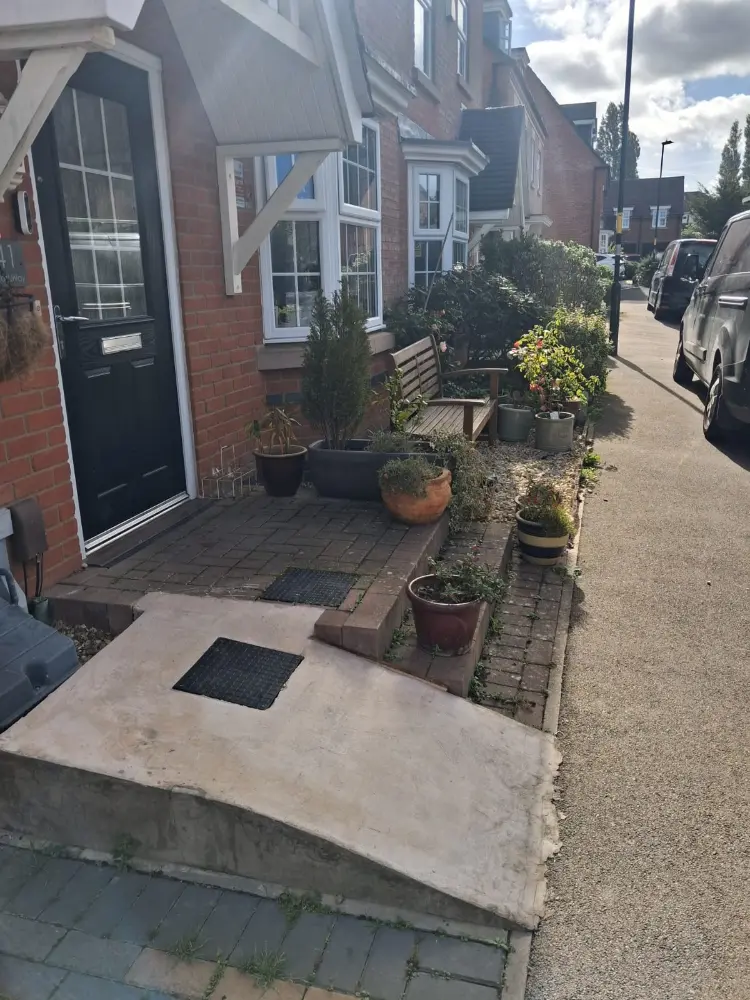
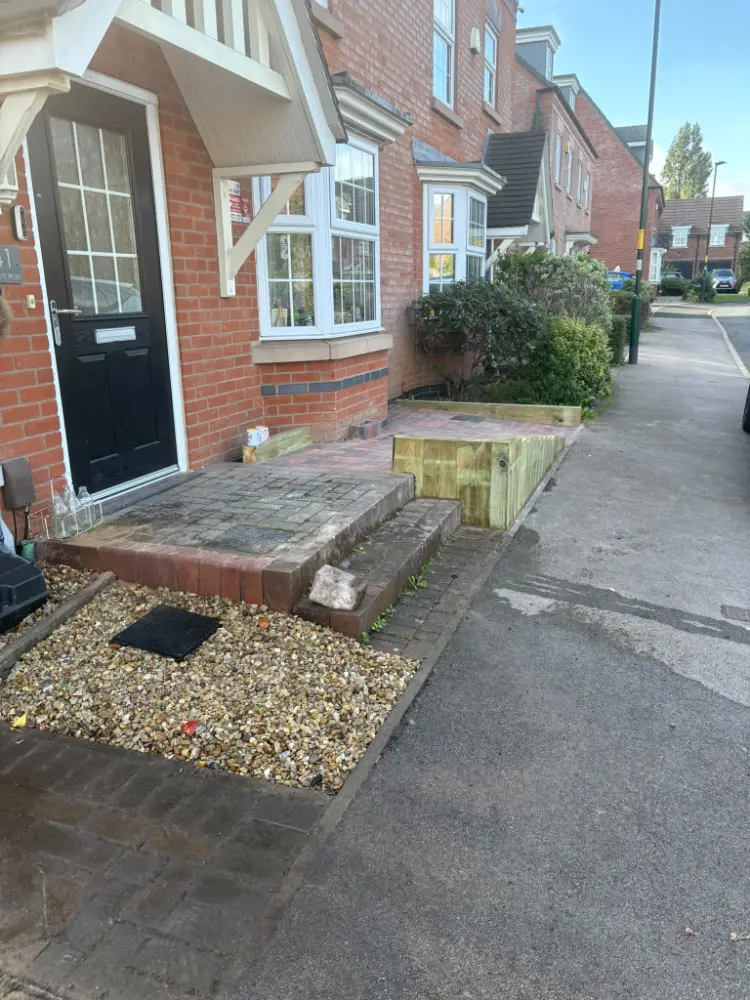
Before work began, the entrance was reached across a raised paved area with a short concrete slope beside the pavement. The restricted layout, changes in level and surrounding planters left limited space for wheelchair access.
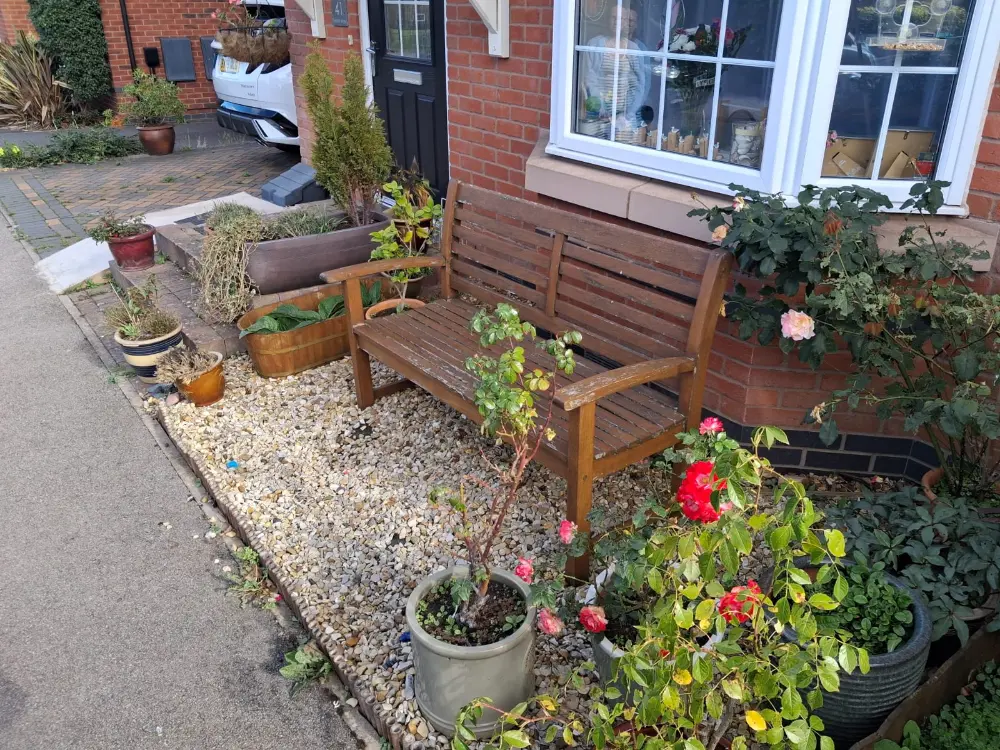
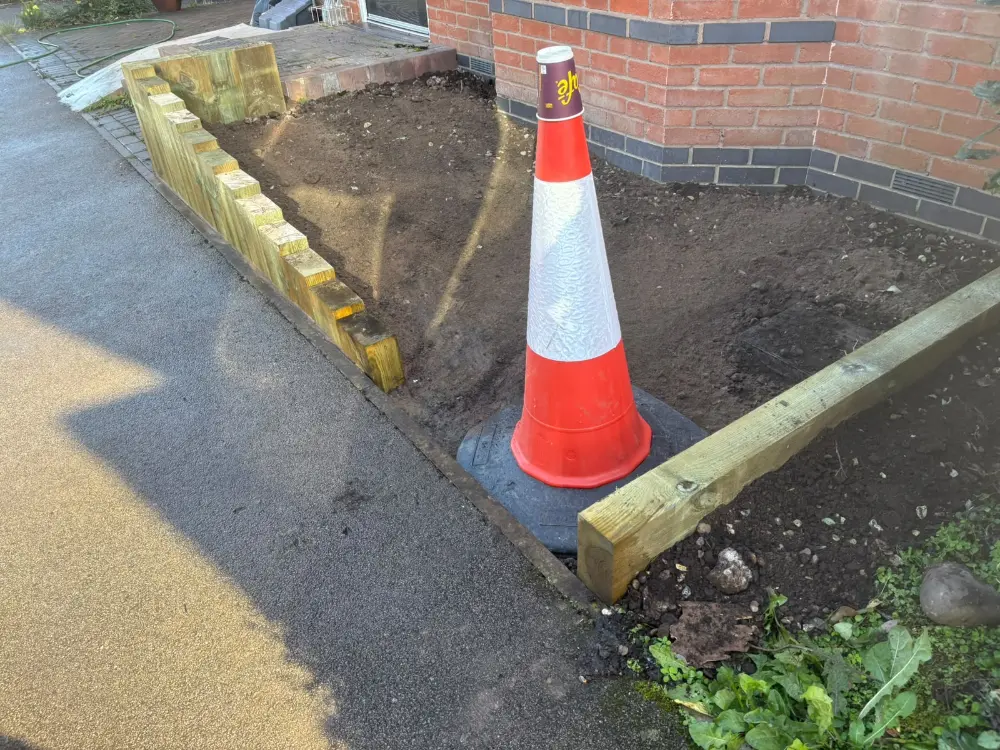
To create a more usable approach, TessCon needed to make better use of the space alongside the front bay window. The bench, decorative gravel, planters and sections of the existing paving were removed so that the area could be properly prepared.
Preparing the Ramp
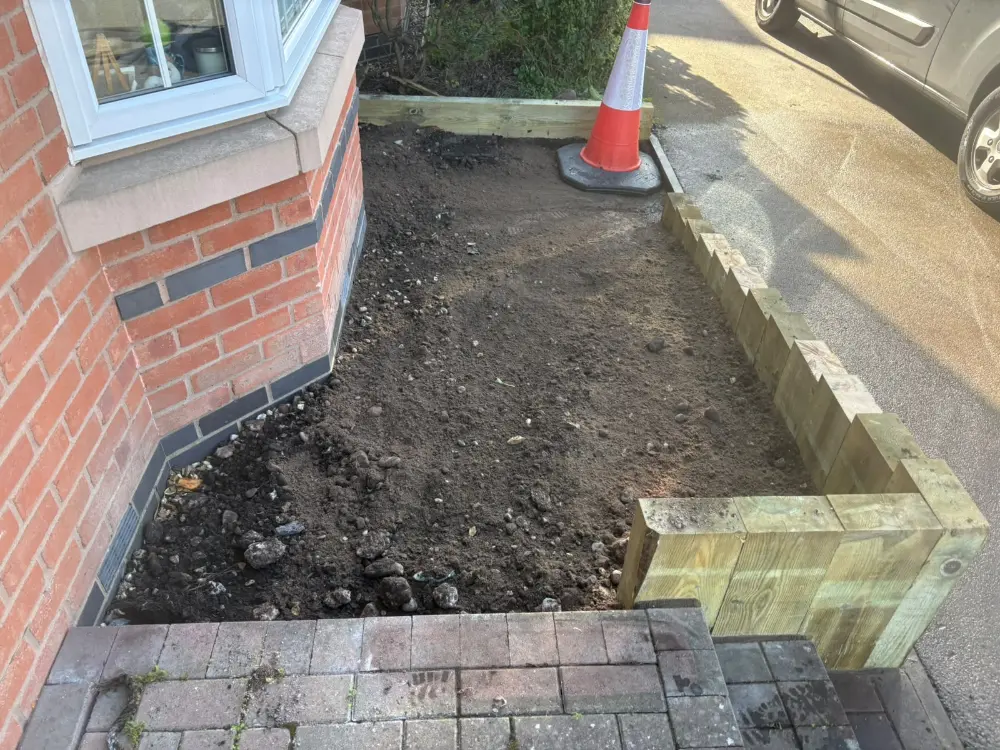
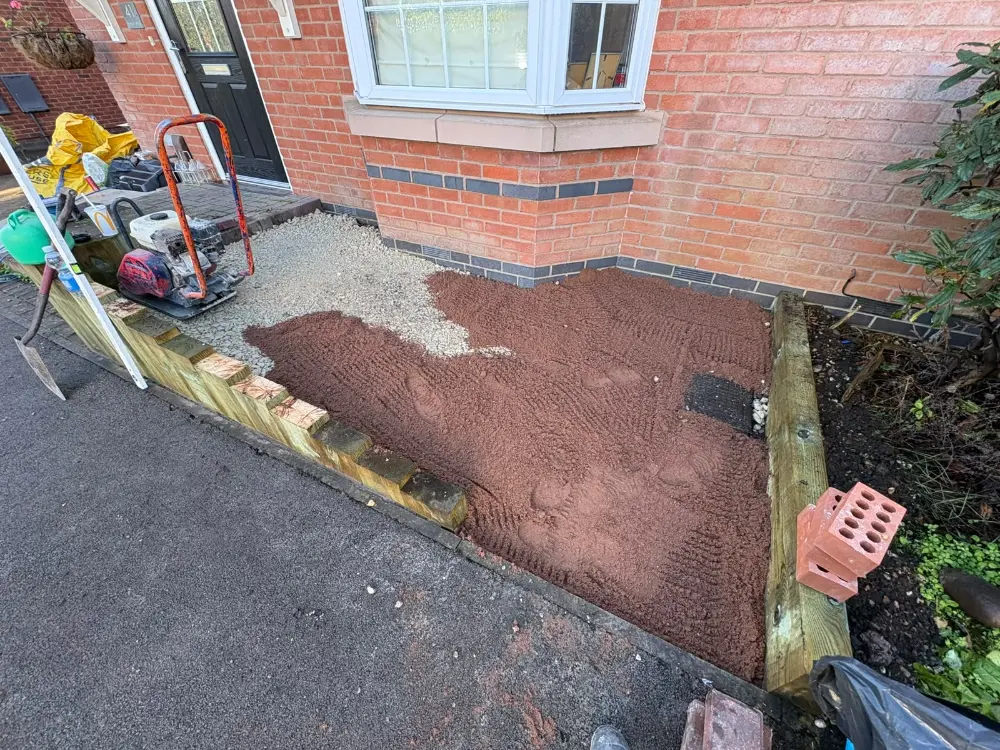
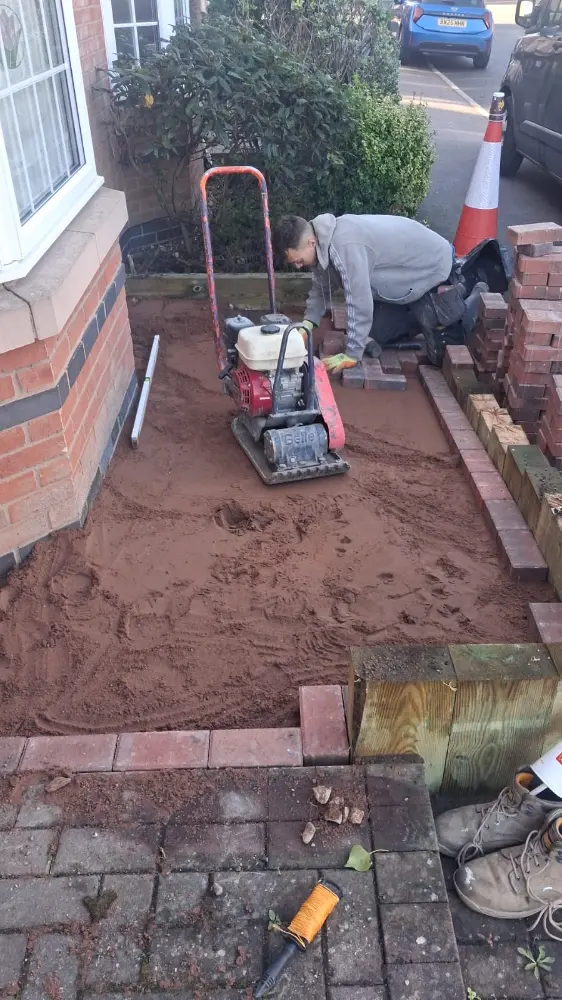
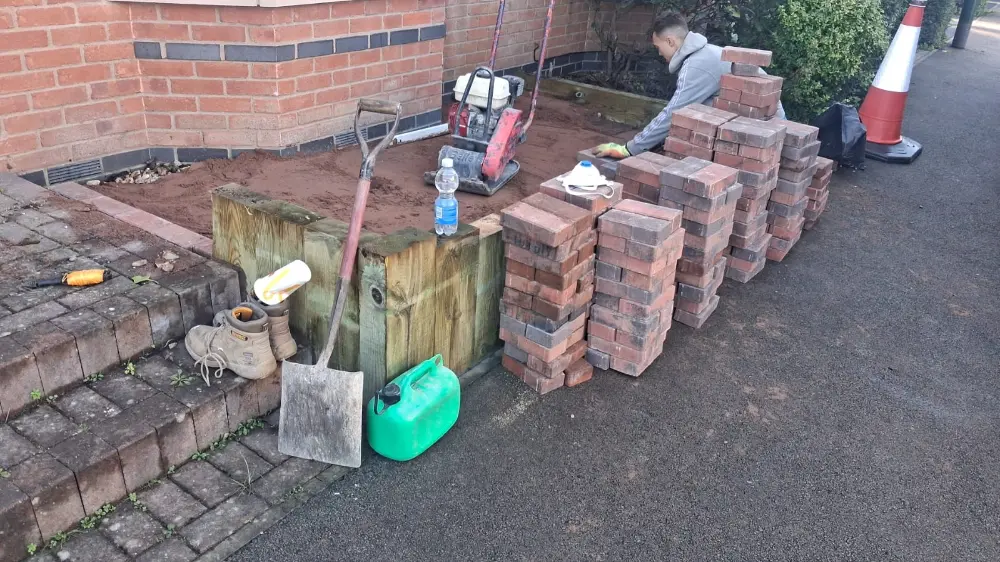
After clearing the working area, the ground was excavated and the new ramp profile was formed. A compacted sub-base was installed to provide a firm and stable foundation, followed by a carefully prepared laying course for the paving.
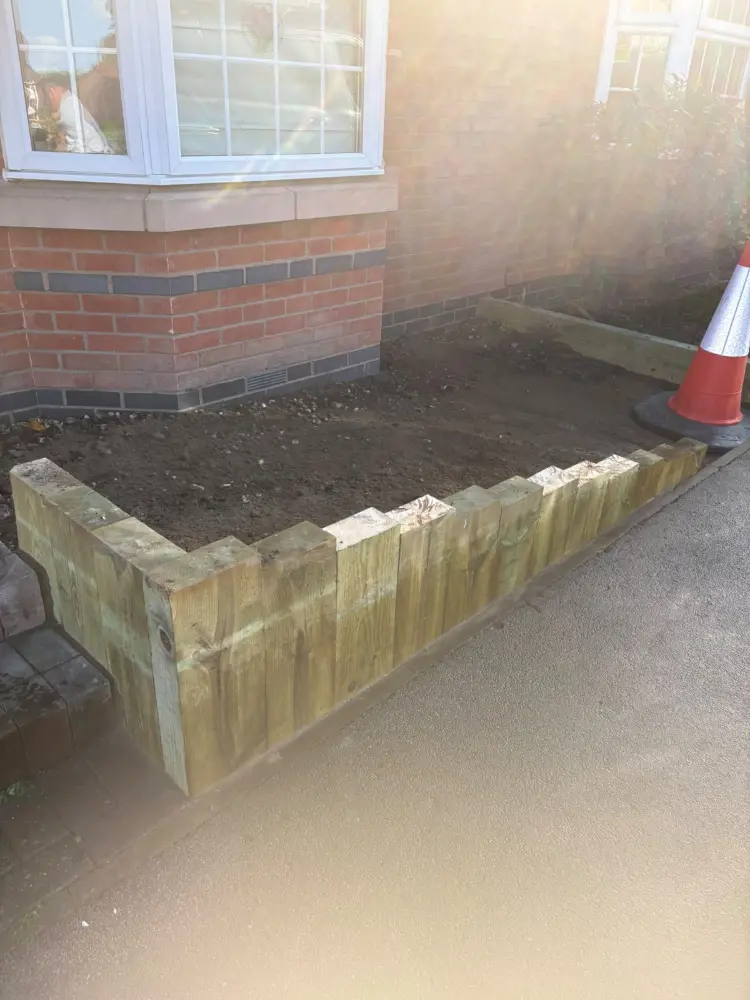
Treated timber sleepers were used to retain the raised outer edge beside the pavement. This created a strong boundary for the new surface while allowing the ramp to fit neatly within the available frontage.
The existing red and charcoal block paving was carefully lifted during the preparation work. The blocks were then incorporated into the finished surface, helping the new accessible route complement the brickwork and established paving around the property.
A Practical Block-Paved Approach
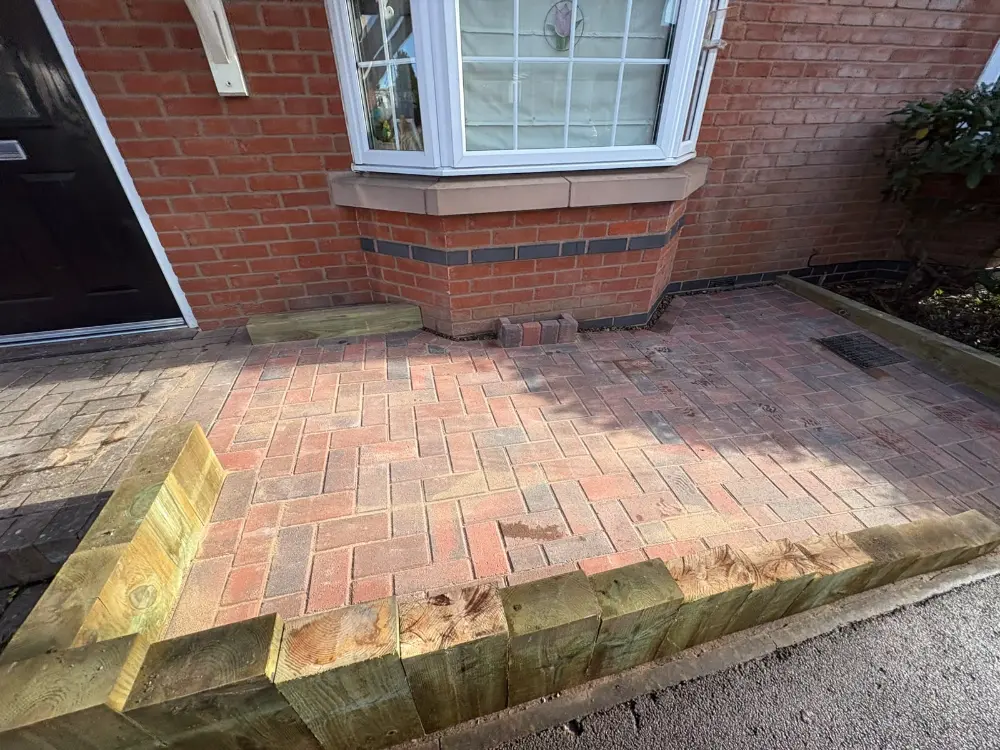
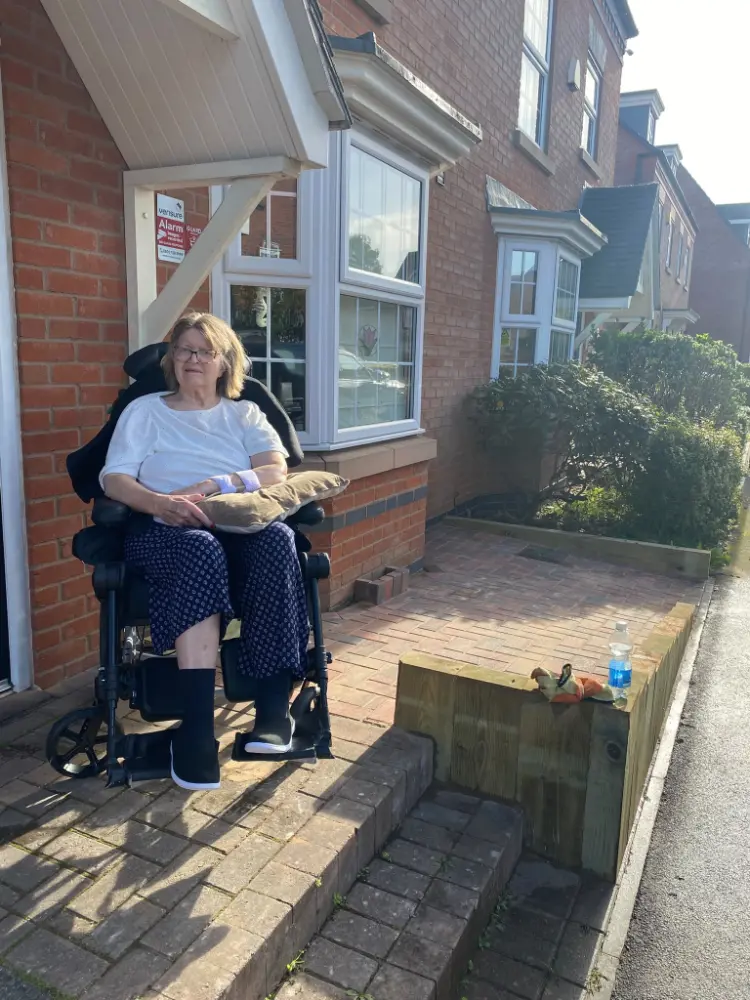
The completed ramp follows the front of the house, providing a broad paved route between the pavement and entrance. The blocks were laid in a herringbone pattern to create an attractive, durable surface that feels consistent with the character of the property.
Careful detailing around the bay window, planting area and existing entrance allowed the adaptation to sit naturally within the frontage. The result is a practical access improvement that looks considered rather than added as an afterthought.
Work Carried Out
- Removal of planters, gravel and the existing bench
- Careful lifting and storage of existing block paving
- Excavation and preparation of the new ramp area
- Installation and compaction of a stable sub-base
- Formation of a suitable sloping approach to the entrance
- Installation of treated timber retaining edges
- Relaying of block paving in a herringbone pattern
- Careful finishing around the house, pavement and planting area
Making a Meaningful Difference
Accessibility work can have a significant effect on daily life. A well-planned entrance adaptation can make it easier to leave and return home, reduce reliance on assistance and give the whole household greater confidence.
“This will make such a difference to us all.” The client
That short comment captures the purpose of the project. The finished ramp is not simply a construction improvement. It provides a more usable entrance and a meaningful change for the people living in the home.
VAT Relief for Disabled and Older People
Some home adaptations for disabled or older people may qualify for VAT relief. However, there is no general VAT exemption for every product or building project, and the customer and the work must meet the relevant conditions.
The Low Incomes Tax Reform Group guidance on VAT reliefs for disabled and older people explains that constructing a ramp at a disabled person’s private residence may qualify for zero-rated VAT when it is needed to help that person gain access to or move around the property. Qualifying preparatory work, necessary making good and materials supplied with the construction service may also be covered.
HMRC states that eligibility normally requires the customer to be chronically sick or disabled, the work to be for their personal or domestic use, and the building work itself to qualify. A written eligibility declaration will usually be required. The relief applies to qualifying ramp construction, but does not automatically extend to unrelated landscaping, a vehicle driveway or every alteration made at the same time.
A separate reduced VAT rate of 5% may be available when certain mobility aids, including ramps, are supplied and installed in the private home of someone aged 60 or over who does not qualify for zero rating. Further details are available in HMRC VAT Notice 701/7.
Eligibility depends on the individual circumstances, so customers should discuss VAT treatment with their supplier before work begins and seek professional tax advice where necessary.
Accessible Home Improvements in Birmingham
TessCon undertakes practical external alterations and landscaping work across Birmingham, including access ramps, paving and improvements designed around the needs of the household.
If access to your home has become difficult, contact TessCon to discuss the property, the available space and the type of adaptation that could make everyday movement easier.
Gallery